








Methodology
How does the dog pregnancy calculator work?
Unlike human pregnancy, which is counted from the last period, a dog's due date depends on which reproductive milestone you know. Canine ovulation and fertilization work very differently, so the method you pick changes the accuracy a lot.
Most online calculators accept only a single mating date, which leaves a window of up to 14 days (±7). This one offers five methods, calibrated against reproductive standards from Colorado State University Veterinary Teaching Hospital and the Cornell University Riney Canine Health Center.
- 1
Single breeding date
Counts 63 days from the mating. Sperm can live up to 7 days in the uterus and fertilization is delayed, so the true range is 56 to 70 days.
- 2
First and last mating
When there were several matings, conception could have happened at any point. The earliest date comes from the first mating (day 56) and the latest from the last (day 70).
- 3
Confirmed ovulation date
The gold standard. Ovulation is confirmed when serum progesterone passes 5.0 ng/mL. Whelping then comes at 63 days ± 1 in 95% of healthy dams.
- 4
LH surge peak
Ovulation follows the LH surge by about 48 hours. Delivery occurs 65 days ± 1 after the peak.
- 5
Diestrus day 1
Found through serial vaginal cytology, when cornified cells drop by more than 20%. Whelping follows 57 days ± 2 later.
| Method | Average | Normal range | Precision | Best for |
|---|---|---|---|---|
| Mating date | 63 days | 56 – 70 | ±7 days (wide) | Natural ties, no hormone tests |
| Ovulation date | 63 days | 62 – 64 | ±1 day | Progesterone-tested litters |
| LH surge peak | 65 days | 64 – 66 | ±1 day | Serial blood testing, AI |
| Diestrus day 1 | 57 days | 55 – 59 | ±2 days | Confirming dates afterwards |
Physiology
How long are dogs pregnant?
On average, 63 days: about nine weeks, or just over two months. Counted from the mating date, normal gestation runs from roughly 58 to 68 days.
- days
- 63daysRange 56 to 70
- weeks
- 9weeksThree trimesters of 3
- months
- ≈2monthsRapid fetal development
Does breed size change it?
Borge et al. (2011) studied 10,810 litters across 224 breeds. The timeline is largely fixed across the species, but toy and small breeds deliver slightly early (about 62.5 days) and giant breeds slightly late (63.5 to 64).
| Size group | Examples | Gestation | Mean litter |
|---|---|---|---|
| Toy (< 5 kg) | Chihuahua, Yorkie, Pomeranian, Maltese | 62 – 63 days | 3.5 (1–5) |
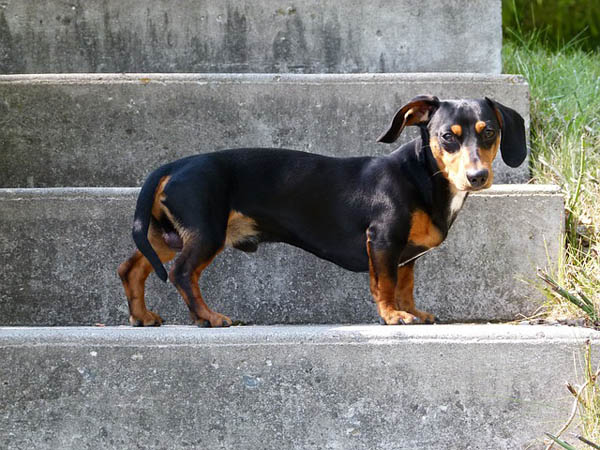
| Small (5–10 kg) | French Bulldog, Dachshund, Boston Terrier, Shih Tzu | 62 – 63 days | 4.5 (2–7) |
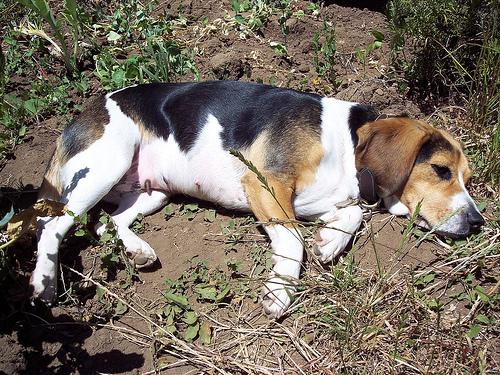
| Medium (10–25 kg) | Beagle, Border Collie, English Bulldog, Whippet | 63 days | 5.5 (3–9) |
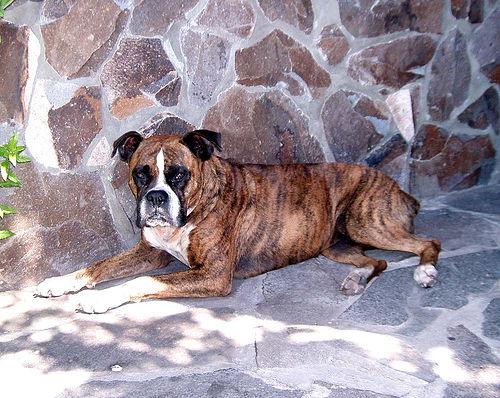
| Large (25–45 kg) | Golden Retriever, Labrador, German Shepherd, Boxer | 63 days | 7.0 (4–11) |
| Giant (> 45 kg) | Great Dane, English Mastiff, Saint Bernard, Cane Corso | 63 – 64 days | 8.0 (5–13) |
Progression
Dog pregnancy, week by week
Pregnancy divides into three trimesters of about 21 days. Here is the roadmap from day 0 to delivery.
First trimester
Fertilization and implantation · days 0–21
Conception and cell division
Fertilization happens in the oviducts and the zygotes divide into morulae. She behaves normally. Keep her on standard adult food; no supplements or vaccines.
Blastocysts migrate
The blastocysts travel into the uterine horns and space themselves out. Avoid flea and tick spot-ons, dewormers or any medication without vet approval.
Implantation
Around day 16–18 the blastocysts embed in the uterine lining and the placenta begins to form. Some dams turn clingy or have mild, passing nausea.
Second trimester
Organs form and pregnancy is confirmed · days 22–42
Ultrasound confirmation
At days 25–30 the embryonic sacs are about walnut-sized. A vet can confirm pregnancy by abdominal ultrasound and see heartbeats (180–220 bpm). Nipples enlarge and turn pink.
Organs form; change the diet
Embryos become fetuses as eyes, claws, whiskers and palate form. Move her to a high-density puppy food (about 30% protein, 20% fat) and raise daily calories by 20–25%.
Skeletons harden
Fetal bones begin to calcify and her belly visibly grows. Split meals into 3–4 smaller portions as the uterus presses on her stomach.
Third trimester
Growth, nesting and delivery · days 43–63+
Introduce the whelping box
The puppies are fully formed and growing coats. Set up the box in a quiet room at 75–80°F (24–27°C) so she gets used to sleeping and nesting in it.
X-ray and supplies
At days 50–55 book an abdominal X-ray to count skulls and spines. Milk may start to leak. From day 56, take her temperature twice daily.
Labor and whelping
Puppies are fully viable. Watch for the temperature dropping below 99.0°F (37.2°C), then nesting, shivering, panting and refusing food. Active contractions follow within 12–24 hours.
Diagnostics
Ultrasound or X-ray: what and when
Good prenatal care lowers newborn deaths and whelping emergencies. Each kind of imaging answers a different question, so timing matters.
Days 25 – 30
Abdominal ultrasound
Confirms the heartbeat (180–220 bpm) and the health of the fluid. It cannot give a reliable puppy count, because the uterine horns coil and overlap.
Goal: confirm viability and spot early resorption.
Days 50 – 55
Abdominal X-ray
Fetal bones mineralize after day 45. Two views let the vet count skulls and spines, and compare head size to her pelvic inlet to anticipate dystocia.
Goal: count the puppies so you know when she is finished.
Breed risk
Breeds that need extra attention
Some breeds have very high rates of dystocia (difficult birth). Evans and Adams (Journal of Small Animal Practice, 2010) analyzed caesarean rates across 13,141 litters and found extreme differences between breeds.
| Breed | C-section rate | Main cause | Usual plan |
|---|---|---|---|
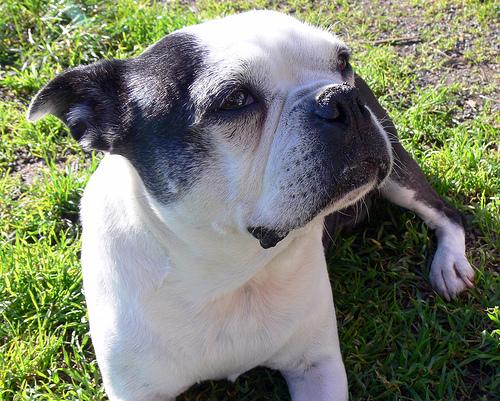
| Boston Terrier | 92.3% | Fetal skull too large for the pelvic inlet | Planned C-section at day 62 |
| English Bulldog | 86.1% | Brachycephaly, broad shoulders, narrow pelvis | Elective surgery; natural whelping not advised |
| French Bulldog | 81.3% | Fetal-pelvic disproportion; 15.9× dystocia risk (RVC VetCompass) | Progesterone timing plus scheduled surgery |
| English Mastiff | 64.6% | Uterine inertia in large litters | Close monitoring in stage 2 |
| Scottish Terrier | 59.8% | Pelvic geometry, broad puppy skulls | Day 52 X-ray to check clearance |
| Chihuahua | High (>35%) | Oversized single puppy, pelvic stenosis, eclampsia | Toy-breed specialist on standby; manage calcium |
Accuracy
How accurate is it? The mating vs ovulation gap
Owners are often alarmed when a bitch whelps on day 58 or day 67 after mating. The biology explains why a mating date has a 14-day normal window.
- Sperm outlives the tie. Canine sperm can survive 5 to 7 days in the female tract before the eggs are ready. A dog bred on day 10 of estrus may not conceive until day 15.
- Eggs need time to mature. Dogs ovulate immature oocytes that need 48 to 72 hours in the oviduct before they can be fertilized.
- Ovulation closes the gap. When progesterone testing pins down the day of ovulation, gestation is uniform: 63 days ± 1.
Labor and delivery
Signs of labor and the three stages of whelping
Knowing the stages helps you step in only when it is medically necessary.
Stage 1
Cervical dilation
6–12 hours (up to 24 in first litters)
Contractions begin inside, with no visible straining. She is restless, pants, shivers, paces, may vomit clear fluid and refuses food. Her temperature falls below 99.0°F (37.2°C).
Stage 2
Straining and delivery
3–12 hours total, 30–60 minutes per puppy
Rhythmic, visible contractions. The water bag appears and breaks, a puppy is born, and she tears the sac and chews the cord. Puppies arrive head-first (about 60%) or tail-first (about 40%); both are normal.
Stage 3
Placenta and rest
5–15 minutes after each puppy
Each placenta should follow its puppy, though two puppies sometimes come before two placentas. Count them: a retained placenta can cause life-threatening metritis and sepsis.
Call your vet immediately if…
- Green or black discharge appears before the first puppy. This points to early placental separation. The puppies can run out of oxygen within minutes.
- Hard contractions go on for 30–45 minutes with no puppy. This suggests an obstruction or a malpositioned puppy.
- More than 2 to 4 hours pass between puppies when you know more remain, for example from a day-50 X-ray.
- A puppy is visibly stuck in the birth canal and gentle traction along the natural downward curve does not free it.
- She passes day 65 from ovulation (or day 70 from mating) with no sign of stage 1 labor.
- She trembles, stiffens, becomes very agitated or has a seizure. These are signs of hypocalcemia (eclampsia), a fast-moving emergency.
Questions
Pregnancy and whelping FAQ
How do I calculate my dog’s due date?
Enter the breeding date or confirmed ovulation date above. With ovulation confirmed by progesterone testing, gestation is very consistent at 63 days ± 1. From a mating date, expect delivery between 56 and 70 days.
Can a dog give birth safely at 55 days?
Puppies born before day 57 from ovulation are premature: their lungs lack surfactant and their gut cannot process colostrum. But day 55 after a mating could be day 59 from true ovulation, which is viable. If contractions start before day 58, call your vet.
What are the earliest signs of pregnancy?
Around days 21–28 you may see mild lethargy, reduced appetite, a clear odorless discharge and swollen pink nipples. Confirm with an abdominal ultrasound at days 25–30.
How many puppies will she have?
It depends on breed size, age and parity. Borge et al. (2011): toy breeds average 3.5, medium 5.5 and giant 8.0. An X-ray after day 50 is the only reliable count.
Should I give calcium supplements while she is pregnant?
No. Extra calcium in pregnancy suppresses her parathyroid, so she cannot mobilize bone calcium when lactation begins, which can bring on eclampsia. Give oral calcium only during whelping or nursing, on your vet's instruction.
What is the normal temperature drop before whelping?
Baseline is 100.0–101.5°F (37.8–38.6°C). In the 24 hours before delivery, progesterone falls and her temperature drops below 99.0°F (37.2°C), sometimes to 97.5°F. Active labor almost always follows within 12 to 24 hours.
Dr. Sarah Mitchell, DVM · Board-certified theriogenologist
Graduated from the Colorado State University College of Veterinary Medicine and completed a residency in small animal reproduction. Has supervised more than 1,200 canine litters, with a research focus on preventing dystocia and improving newborn survival.
Clinical review completed October 2026. Content follows WSAVA and AVMA reproductive protocols.
References
- Borge KS, Tønnessen R, Nødtvedt A, Indrebø A. (2011). Litter size at birth in purebred dogs—A retrospective study of 224 breeds. Theriogenology, 75(5), 911–919. doi:10.1016/j.theriogenology.2010.10.034
- Evans KM, Adams VJ. (2010). Proportion of litters of purebred dogs born by caesarean section. Journal of Small Animal Practice, 51(2), 113–118. doi:10.1111/j.1748-5827.2009.00902.x
- O'Neill DG, Packer RMA, Francis P, Church DB, Brodbelt DC, Pegram C. (2021). French Bulldogs differ to other dogs in the UK in propensity for many common disorders: a VetCompass study. Canine Medicine and Genetics, 8(1), 13. doi:10.1186/s40575-021-00112-3
- Colorado State University, James L. Voss Veterinary Teaching Hospital. Small Animal Reproduction: ovulation timing, progesterone testing and pregnancy management. Reproductive Care service page. vetmedbiosci.colostate.edu
- Cornell University Riney Canine Health Center. Normal whelping process. Canine Health Information. vet.cornell.edu
- Merck Veterinary Manual. Whelping and queening. Management of Reproduction: Small Animals. merckvetmanual.com